If you run a health and wellbeing programme, you’ve probably seen this pattern:
Week 1: Great energy.
Week 2: People are still in it.
Week 3: Participation starts to dip.
Week 4: Only the most motivated people are left.
It’s frustrating, because the programme is often strong. The content is good. The comms are fine. The goal is clear.
So why do so many wellness initiatives lose momentum?
Most of the time, the answer is simple: the reward stops feeling worth it.
In this post, I’ll break down why engagement drops after week 2-4, what’s really going on behind the scenes, and a few practical ways to design rewards that keep behaviour change going long-term.
The real problem isn’t motivation. It's relevance.
Most people don’t drop off because they don’t care about their health. They drop off because the programme stops feeling personal.
A reward that motivates one person might do nothing for someone else.
A few common examples:
- Someone who already works out might not care about free gym gear
- Someone managing stress doesn’t want a fitness-focused reward
- Someone on a tight budget wants everyday value, not 'nice-to-have' perks
- Someone working shifts can’t always join live challenges or scheduled activities
When the reward feels mismatched, it becomes background noise.
And once that happens, your wellbeing programme becomes a 'nice idea' instead of a habit.
Why engagement drops after week 2-4
Week 1 works because novelty does a lot of the heavy lifting. There’s a fresh start effect, a burst of excitement, and often a strong launch push from internal comms or your platform experience.
But by week 2-4, people start asking: “Is this still worth my time?”
And if rewards feel repetitive, too small, too generic, or hard to redeem, they stop feeling like a reason to keep going.
Here are the most common causes we see:
1) Rewards feel the same every time
If every milestone leads to the same reward type, people lose interest quickly.
Even if the reward is good, the predictability reduces motivation.
2) The reward doesn’t fit real life
Not everyone wants more 'wellness stuff.'
A great reward for a wellbeing programme can be something that supports day-to-day life:
- Coffee
- Books
- Cinema
- A meal out
- A weekend experience
- A treat that helps someone reset
3) Redemption is slow or messy
If people can’t redeem instantly (or need support to redeem), you lose the moment.
Rewards need to feel immediate.
4) The programme struggles to stay inclusive
One-size-fits-all rewards can unintentionally exclude people:
- Remote workers
- Shift workers
- Carers
- Different income levels
- Different mobility needs
different locations
A wellbeing initiative should feel fair to everyone, not tailored to one ideal user.
What actually works: rewards that support sustained habits
If you want engagement to last, your rewards need to match how behaviour change works.
That means designing for consistency, not just completion.
Here are a few proven strategies:
1) Replace 'big prize at the end' with smaller rewards over time
Big rewards are exciting, but they often motivate only the people who would finish anyway. Smaller, consistent rewards can help more people stay engaged.
A simple example:
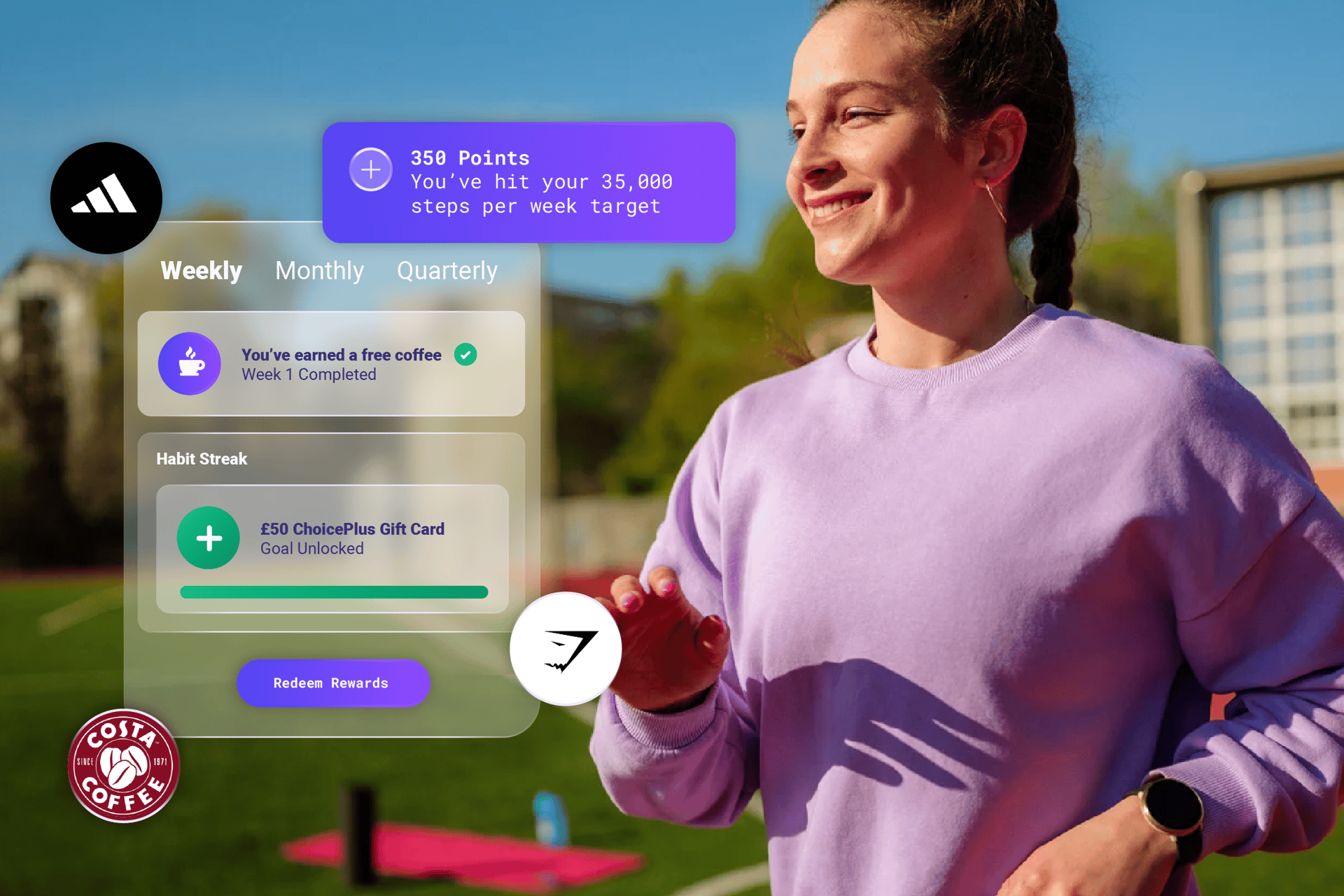
- Weekly or bi-weekly milestones
- Monthly progress rewards
- Quarterly 'habit streak' rewards
This works because it supports the middle part of the journey – the part where people usually drop off.
2) Make rewards flexible, not prescriptive
If you want people to feel ownership of the programme, give them a reward they can choose.
Choice is powerful because it’s personal.
It lets different people stay motivated for different reasons:
- Fitness goals
- Self-care
- Family support
- Stress management
- Lifestyle improvements
When people can pick a reward they genuinely want, you remove the biggest reason rewards fail: irrelevance.
3) Use reward categories that match well-being in the real world
Wellbeing rewards don’t have to mean just new trainers. In fact, some of the strongest reward categories for engagement include:
Fitness + sports: Nike, Adidas, Under Armour, Gymshark, JD Sports, Decathlon
Experiences + lifestyle: Virgin Experience Days, Red Letter Days, dining, theatre, local days out
Wellness + relaxation: spa vouchers, self-care brands, hotels, small luxury treats
Culture + downtime: books, cinema, gardens, nature days, quiet rewards that help people recharge
Everyday favourites: coffee and simple treats that feel immediate and accessible
The key is that the reward feels like it supports wellbeing in someone’s own life, not someone else’s version of wellbeing.
4) Keep budgets predictable without killing momentum
A common worry for benefits and finance teams is cost control. But budget certainty doesn’t mean your reward experience has to feel limited.
The simplest approach is:
- Fixed allowances per user
- Consistent monthly or quarterly spend
- Clear reporting on redemption trends
That way, you can scale rewards without fear of runaway cost.
5) Learn what people want without creating privacy risk
Wellbeing can be sensitive. Most organisations don’t want to collect personal data about someone’s health or lifestyle choices, and they shouldn’t have to.
The right reward setup gives you insight like:
- Which reward categories get used most
- Which brands are most popular
- What drives repeat engagement
Without needing to capture personal identity or health data. You get better decisions, without crossing privacy lines.
A quick checklist: is your reward strategy built to last?
If you want to sanity-check your programme, here are seven quick questions:
✅ Are rewards instant to redeem?
✅ Can different people choose different things?
✅ Does it work for hybrid and remote teams?
✅ Can you run it monthly or quarterly with a predictable cost?
✅ Do rewards feel relevant after week 3?
✅ Are there options beyond standard retail gift cards?
✅ Can you measure what’s working without collecting sensitive data?
If you’re answering “no” to any of these, that’s a good sign there’s room to lift engagement without changing your full programme.
Final thought: don’t blame the programme if the reward design is the issue
Most wellbeing programmes don’t fail because they’re poorly built. They fail because they’re trying to drive long-term behaviour with short-term incentives that reduce engagement after the first few weeks.
If you redesign rewards around choice, consistency, and real-life relevance, engagement becomes much easier to sustain.
And that’s where the real value sits, not in week one sign-ups, but in week six habits.
If you'd like to find out more, you can contact us here.